Speccy Emulator recreates Sinclair ZX Spectrum on modern Windows PCs
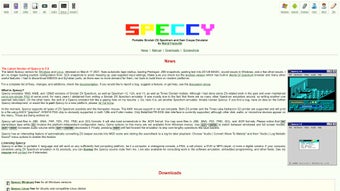
Speccy Emulator, by Marat Fayzullin, recreates Sinclair ZX Spectrum hardware on Windows and other platforms for running classic software. It emulates multiple Spectrum models and international clones, and it loads tape, disk, and snapshot images to run games and applications. The app offers developer-oriented tools and audio utilities for analysis. Retro gamers, computer historians, and developers benefit from accurate emulation and a highly portable C-based codebase; the developer's background in portable emulators underpins the project's technical focus.
Speccy reproduces multiple Spectrum variants and preserves original file formats
Inside the emulation, Speccy implements model-specific memory maps and Z80 timing to match 16k, 48k, 128k, and +2/+3 behavior as well as many international clones. It accepts a wide set of image types for immediate execution. Supported formats include snapshot and tape containers and several disk images; common examples are .Z80 and .SNA snapshots, .TAP and .TZX tape images, and disk formats such as .DSK, .TRD, and .SCL.
Peripheral support and developer tools aim at preservation and testing
When interacting with legacy hardware, the emulator simulates printers and input interfaces and exposes inspection tools for developers. Emulated peripherals include the ZX Printer and Alphacom32 plus joystick standards. The package provides a built-in debugger and precise state save/load to .SNA or .Z80 files, which suits software testing, archival workflows, and reproducing specific execution states.
Audio capabilities serve faithful playback and technical analysis
When sound is required, Speccy reproduces the AY8910 programmable sound generator alongside the internal beeper with attention to timing. It also offers melodic audio logging that converts beeper output into MIDI scores, a unique feature for extracting chiptune melodies. Musicians and researchers can export MIDI logs to examine note sequences and timing rather than rely solely on real-time audio capture.
Design favors portability, low resource use, and long-term maintenance
Inside its architecture, Speccy uses a C-based core that eases cross-platform compilation; current builds target Windows, Linux, and a dedicated Android release. Legacy MS-DOS and Symbian ports are discontinued. The small footprint and long-running development history contribute to modest system demands and operational stability, making the emulator practical on lower-end hardware and for archival tasks.
Speccy is a specialist tool suited to preservation and technical users
Speccy is a specialist choice for preservationists and developers because of the developer's long track record since 1995 and his history creating portable emulators. However, the interface emphasizes function over modern presentation, which makes the tool less appealing to users who prioritize a polished front end. For archival work, technical analysis, and running obscure Spectrum software, Speccy is worth trying.